

Introduction
Creating your own furniture is one of the most rewarding ways to improve your home while learning practical skills. DIY furniture projects allow you to design pieces that match your style, save money, and make better use of available space. Whether you want a simple coffee table, a bookshelf, or a storage bench, starting with beginner-friendly projects can build confidence and experience. With the right tools, careful planning, and quality materials, anyone can create attractive and functional furniture that lasts for years.
What are DIY furniture projects?
DIY furniture projects refer to building, repairing, or customizing furniture without hiring professional carpenters. These projects range from simple wooden shelves to more advanced dining tables and cabinets.
Many people choose DIY woodworking because it offers complete creative freedom. Instead of buying mass-produced furniture, you can build unique pieces that perfectly fit your room, budget, and personal preferences. Popular projects include rustic coffee tables, wall-mounted shelves, storage benches, TV stands, and bedside tables.
Why are DIY furniture projects important?

Building your own furniture provides several practical and creative advantages. First, it helps reduce furniture costs while allowing you to customize dimensions and finishes.
Second, it promotes sustainability by reusing wood, pallets, or reclaimed materials. DIY Furniture Projects. Finally, DIY woodworking improves problem-solving skills and teaches valuable techniques that can be used in future home improvement projects.
Step-by-Step Guide
Step 1: Choose the Right Project
Select a project that matches your skill level. Beginners should start with simple furniture such as shelves or stools before attempting larger builds.
Step 2: Gather Materials and Tools
Prepare everything before starting.
- Measuring tape
- Drill
- Circular or handsaw
- Sandpaper
- Screws and wood glue
- Protective goggles
- Quality wood boards
Having all materials ready prevents unnecessary interruptions during construction.
Step 3: Measure and Plan Carefully
Accurate measurements are essential. Sketch your design and double-check every dimension before cutting the wood.
Planning reduces waste and helps ensure all parts fit together properly.
Step 4: Cut and Assemble
Cut each piece according to your measurements. Assemble the frame gradually while checking that every corner remains square.
Use clamps whenever possible to keep the structure stable while attaching screws or applying glue.
Step 5: Sand, Finish, and Protect
Smooth rough edges using sandpaper before applying paint, stain, or protective wood finish.
Allow sufficient drying time before placing the furniture into regular use.
Benefits
Building furniture yourself offers numerous advantages.
- Saves money compared to buying premium furniture.
- Encourages creativity and personal expression.
- Allows complete customization of size and style.
- Develops woodworking and problem-solving skills.
- Reduces environmental waste through recycled materials.
- Creates durable furniture with proper craftsmanship.
- Provides personal satisfaction after completing each project.
Risks or Disadvantages
Like any home improvement activity, there are some challenges.
- Requires time and patience.
- Mistakes can waste materials.
- Initial tool purchases may be expensive.
- Incorrect measurements can affect the final result.
- Power tools require careful handling and safety precautions.
- Complex designs may overwhelm complete beginners.
Common Mistakes to Avoid
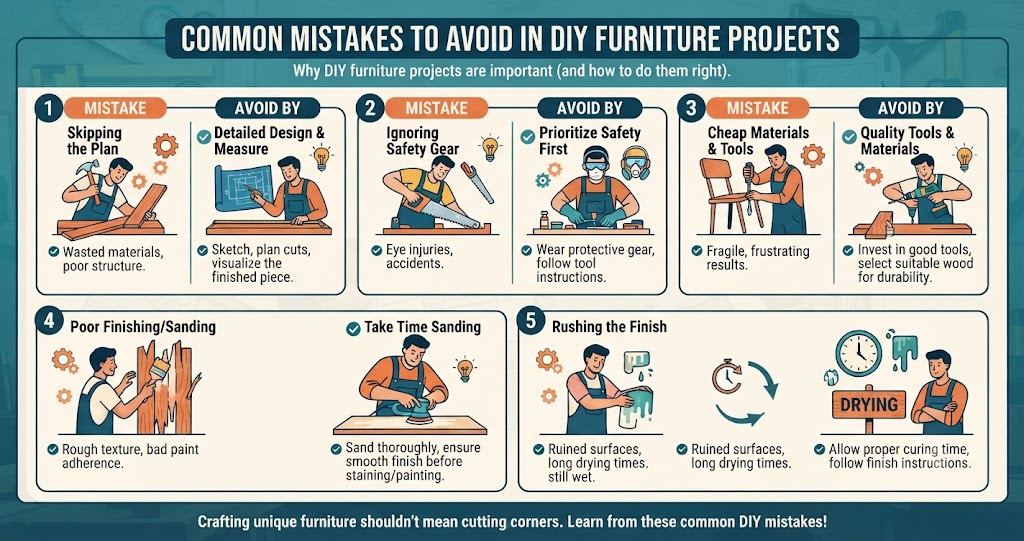
Many beginners rush through important preparation steps.
Avoid skipping measurements or assuming every board is perfectly straight. Never ignore safety equipment while cutting or drilling wood.
Using low-quality materials may shorten the lifespan of your furniture. Applying paint before proper sanding often results in rough finishes.DIY Furniture Projects
Finally, avoid selecting advanced designs too early. Gradually increasing project difficulty leads to better craftsmanship and greater confidence.
FAQs
Is DIY furniture suitable for beginners?
Yes. Simple shelves, stools, and storage boxes are excellent starter projects.
What wood is best for beginners?
Pine is affordable, easy to cut, and widely recommended for first-time builders.
How long does a typical project take?
Small projects often require one weekend, while larger furniture may take several days.
Do I need expensive tools?
No. Basic hand tools and a drill are enough for many beginner projects.
Can recycled wood be used?
Yes. Reclaimed wood is affordable, environmentally friendly, and adds unique character to furniture.
Expert Tips
Start with small, achievable projects before attempting large furniture builds. Always purchase slightly more material than your measurements require in case of mistakes.
Label every cut piece during assembly to avoid confusion. Test-fit components before applying glue or screws. Invest in quality measuring tools because accuracy determines the overall finish.
Watch your workspace carefully by keeping it clean and well-lit throughout the project. Practice basic cutting and drilling techniques on scrap wood before working on expensive materials. Most importantly, enjoy the learning process because every completed project improves your confidence and woodworking skills.
Conclusion
DIY furniture projects provide an enjoyable way to create functional, beautiful furniture while developing valuable practical skills. Beginners can achieve impressive results by choosing manageable projects, planning carefully, using reliable tools, and following safe construction practices. DIY Furniture Projects: DIY Furniture Projects Every completed piece builds experience and inspires more creative ideas for future home improvements. Whether you are making a bookshelf, coffee table, or storage bench, consistent practice and attention to detail will help you produce furniture that is attractive, durable, and uniquely suited to your home and personal style.